Benefits and success stories of foreign companies having manufacturing bases in Vietnam
Vietnam Manufacturing Industry: Benefits and Success Stories of Foreign Companies
Why are global giants like Samsung, Nike, and Intel shifting their production to Vietnam? The answer lies in the powerful appeal of the Vietnam manufacturing industry. With lower operating costs than China, easy market access, and strong support across sectors from textiles to electronics, Vietnam offers a strategic edge for foreign investors. This article explores key benefits, inspiring success stories, and the real challenges of setting up a factory in this fast-growing industrial hub.
Key Benefits of Establishing Manufacturing Bases in Vietnam
The Vietnam manufacturing industry offers multiple benefits that make it a preferred choice for global brands aiming to optimize costs and expand their market reach. Below are the key benefits that drive the surge in manufacturing investments in Vietnam.
Lower Operating Costs Compared to China

Lower operating costs compared to China (Source)

Vietnam offers a significant cost advantage over China. As of 2025, average manufacturing wages range from $200–$450 monthly, compared to China's $500–$900. Precision machine labor costs in Vietnam hover between $3–7/hour versus $6.50–$15/hour in China. Utility rates are also lower, with industrial electricity costing around 30% less. These savings can cut total production costs by 20–40%, making Vietnam a top choice for cost-sensitive operations.
Access to ASEAN and Global Markets
Vietnam's strategic location and trade network open seamless access to ASEAN and global trade routes. The country holds free trade agreements like CPTPP, EVFTA, and RCEP. These agreements reduce export tariffs to key markets in the US, EU, and Asia. Firms can avoid rising Chinese tariffs by shifting production to Vietnam, securing better market access and resilience amid geopolitical shifts.
Diverse Industry Support: From Electronics to Textiles
Vietnam's industrial ecosystem supports a wide range of sectors. Electronics giants like Samsung, Intel, LG, and Foxconn have major operations here. Textiles and footwear firms like Adidas and Nike rely on the country’s modern factories and workforce. In 2024, textile exports rose by nearly 4.6%, powered by $37 billion in FDI. Industry clusters in electronics, garments, plastics, and metal fabrication deliver strong local support and supply chains.
Ease of Business Setup for Foreign Investors

Ease of business set up for foreign investors (Source)
Vietnam offers a clear framework for foreign investors. The manufacturing sector attracted over 1,030 foreign investment projects worth $20.2 billion in 2024. Government incentives include tax holidays, streamlined land leases in established zones like Binh Duong and Thai Nguyen, and industrial parks ready for foreign tenants. Visa and licensing processes have improved. Newly launched investment support funds and land deals further promote foreign high-tech and traditional manufacturing.
Green Manufacturing and ESG Opportunities
Sustainability is gaining momentum in Vietnam. Green hydrogen initiatives aim to produce up to 500,000 tons/year by 2030. Solar, wind, and biomass now power over 25% of total energy, supported by feed-in tariffs and ESG incentives. LEGO's Binh Duong factory is a flagship green facility with solar panels, clean energy, and ambitious emission targets. Vietnam's ESG-aligned policies boost brand value and attract conscious investors.
Success Stories: Global Brands Manufacturing in Vietnam
Samsung's Billion-Dollar Manufacturing Hub
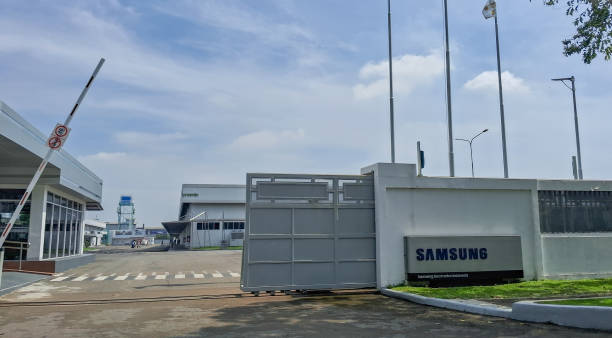
Samsung manufacturing hub (Source)

Samsung leads the pack in the Vietnam manufacturing industry, with massive investment in electronics production. Since 2008, Samsung has built six factories and an R&D center across Bac Ninh, Thai Nguyen, and Ho Chi Minh City. By early 2025, investments soared to $23.2 billion, with $62.5 billion in revenue and $54.4 billion in exports in 2024 alone.
A recent report highlights Samsung's $1.8 billion OLED display plant in Yen Phong industrial park. With this expansion, the company's total investment in Bac Ninh has reached $8.3 billion. Approximately 60% of Samsung's 220 million annual smartphone units originate from Vietnam, supplying key US and global markets.
Local R&D is also thriving: about 2,400 Vietnamese engineers now work on flagship models such as Galaxy Z Flip and Z Fold. Samsung's commitment has boosted local suppliers—level‑1 and level‑2—tenfold since 2014.
Nike and Adidas Footwear Production in Vietnam
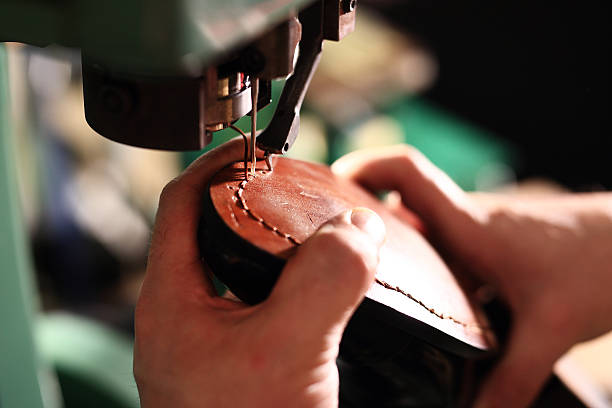
Nike and Adidas footwear production(Source)

Vietnam holds a significant position in the world’s footwear production sector. The country was a key manufacturing base in 2024, supplying 50% of Nike’s shoes and 28% of its clothing. Adidas also depended on Vietnam for 39% of its footwear and 18% of its apparel.
Production clusters across Ho Chi Minh City, Binh Duong, and Dong Nai support advanced fabric and leather processing. Firms apply digital tracking, lean manufacturing, quality control, and worker development programs. These investments elevated Vietnam's standing in global supply chains even amid rising US tariffs. Brand resilience stems from strong factories, skilled labor, and efficient exports. As a result, Vietnam continues to attract further expansion from major apparel brands.
Intel's Investment in High-Tech Facilities
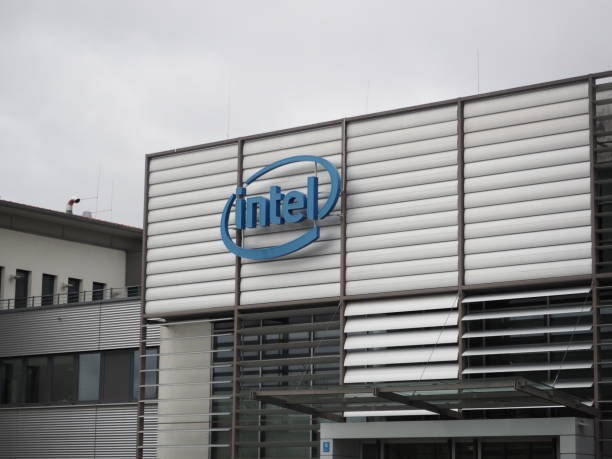
Intel investment (Source)

Intel Partners Vietnam (IPV) is the company's largest assembly-and-test site globally. Backed by a $1.5 billion investment and a workforce of 2,800, IPV produces millions of semiconductor units each year. By end‑2024, IPV had produced nearly 4 billion chips, representing 60% of exports from Saigon Hi‑Tech Park.
Intel continues to expand its high-tech capacity, partnering with universities and promoting workforce skills in AI and tech. This boost elevates the Vietnam manufacturing industry, linking it to global semiconductor supply chains and signaling readiness for advanced tech investment.
Foxconn's Expansion and Apple Supply Chain Involvement
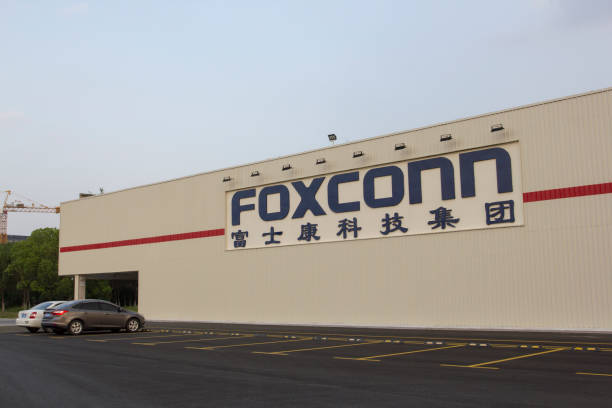
Foxconn expansion (Source)
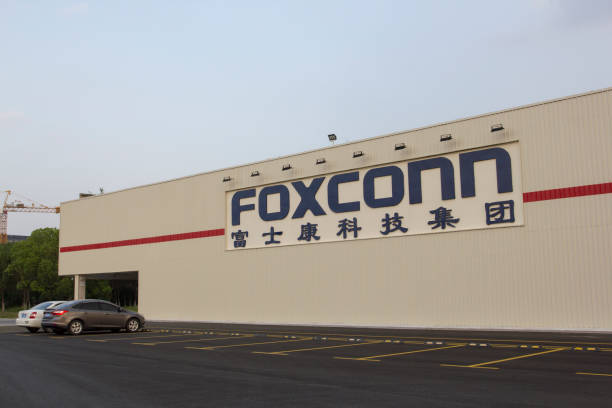
Foxconn, Apple's primary assembler, has invested over $1 billion in northern Vietnam. Two projects in Quang Ninh province received investment approval: $264 million for smart entertainment products and $287 million for smart‑system equipment. Both aim to deliver approximately 4.2 million units annually.
Vietnam hosts more than 35 Apple suppliers as of late 2023, a 40 % increase from prior years. While power availability remains challenging, Vietnam asked Foxconn to voluntarily reduce energy use by 30 % in 2024 due to shortages, and production has continued without major disruptions. Foxconn's growing footprint highlights Vietnam's appeal as a diversified manufacturing base for high‑tech global firms.
LEGO's Eco-Friendly Factory Project in Binh Duong

LEGO factory (Source)

LEGO inaugurated its first clean‑energy toy factory in Southeast Asia in Binh Duong in mid‑2025. This facility spans an area equivalent to 62 soccer fields. It features 12,400 solar panels, an energy storage system, and a direct‑power purchase agreement (DPPA) to access local renewable energy. LEGO commits to cutting emissions by 37 % by 2032 and reaching net zero by 2050.
The factory also planted 50,000 trees, double the construction impact, and replaced plastic packaging with paper. This project underscores rising green trends and further strengthens the Vietnam manufacturing industry through sustainability leadership.
Challenges to Consider When Manufacturing in Vietnam
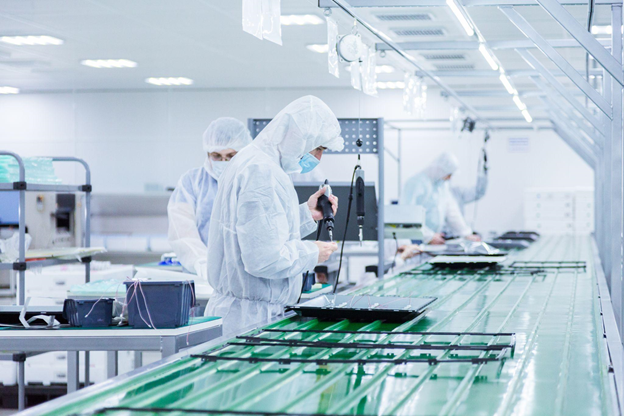
Challenges to consider when manufacturing in Vietnam (Source)
Vietnam offers a compelling manufacturing landscape. Yet, several critical challenges demand attention for companies in the Vietnam manufacturing industry seeking long‑term success.
- Logistics and Port Congestion in Some Areas: Road transport carries roughly 75 % of freight in Vietnam. Major hubs like Cat Lai and Cai Mep-Thi Vai now run at over 90 % capacity, causing delays and driving up shipping costs. New traffic rules forcing truck drivers to rest every four hours have added further delays. About 80 % of logistics firms report moderate to severe disruptions.
- Rising Labor Wages in Urban Zones: Average monthly wages in manufacturing reached around $328 in mid‑2024, up from $296 in early 2024. Urban centers such as Ho Chi Minh City and Hanoi now report wage growth near 10 % annually, narrowing Vietnam's cost edge over regional rivals.
- Need for Greater Automation and Digitalization: Local supply chains often lack digital tools like IoT, AI, and blockchain, making operations less efficient. Due to low automation, logistics costs still represent 16‑17 % of GDP, well above global averages. This creates pressure on manufacturers to invest in automation and training to stay competitive.
- Regional Competition from Indonesia and Thailand: Competitor countries such as Indonesia and Thailand are expanding port capacity, logistics networks, and unique incentives. Vietnam's export growth slowed slightly due to these shifts. Competition for FDI is rising as regional players campaign hard. Investors must weigh cost, connectivity, and incentives when choosing their location.
Why Choose Kizuna Serviced Factory for Manufacturing in Vietnam?
The Vietnam manufacturing industry continues to attract global brands for its cost efficiency and strategic advantages. Kizuna takes these benefits further with its ready-to-occupy serviced factory model.
- Rapid deployment: Turnkey facilities built in strategic locations such as Long An and Can Giuoc allow companies to begin production quickly without long lead times.
- Cost savings: Shared utilities, synchronized infrastructure, and flexible sizing (240 – 10,000 m²) reduce upfront investment and operational expenses.
- Strategic connectivity: Close proximity to HCMC, Cat Lai, and Cai Mep ports, plus major highways and the airport, ensures efficient logistics and global market access.
- Full support ecosystem: Multi-lingual teams provide legal, HR, accounting, administrative, environmental, and maintenance services, all included in the package.
- Quality and reliability: Award-winning design backed by secure 24/7 monitoring, renewable energy options, and adaptable workshop layouts ensure strong operational foundations.
Kizuna's model aligns directly with the needs of foreign investors in the Vietnam manufacturing industry. It addresses common pain points—from setup delays to rising wage pressures—allowing companies to focus on production, compliance, and scaling efficiently. This makes Kizuna an ideal partner for firms targeting cost-effective, sustainable, and agile manufacturing in Vietnam.