Process and necessary procedures for entering the manufacturing industry in Vietnam
Vietnam is rapidly emerging as a key manufacturing hub in Southeast Asia, attracting global manufacturers seeking cost-effective operations, skilled labour, and convenient access to export markets. With the global “China + 1” strategy in motion, many companies are looking at Vietnam as a strategic base. According to the General Statistics Office of Vietnam (GSO), the industrial production index rose by 9.2 % in the first six months of 2025 compared to the same period last year. Trading Economics+3NSO+3Acclime Vietnam+3

Foreign investors entering the manufacturing industry in Vietnam – overview of Vietnam’s industrial zones and ready-built factories by Kizuna.
For a company like Kizuna offering ready-built factory space and full support services, this is an excellent time to consider setting up manufacturing operations. In this guide you will find: an overview of the manufacturing landscape in Vietnam, key benefits, a detailed step-by-step process for market entry, common challenges, and how Kizuna can support you.
1. Vietnam’s Manufacturing Landscape – Overview
1.1 Key Figures & Trends
Vietnam’s manufacturing sector remains a backbone of economic growth. The GSO reports that the processing and manufacturing industry grew by approximately 9.83 % in 2024, contributing 2.49 percentage points to GDP. Vietnam Insider In September 2025, manufacturing production rose by 12.70 % year-on-year. Trading Economics+1 According to the article “Vietnam Manufacturing Landscape 2025” (JTM Asia), in the first eight months of 2025 Vietnam attracted US$26.1 billion in FDI, with manufacturing and processing absorbing the lion’s share. JTM Asia
1.2 Key Sectors & Regional Hubs
Prominent manufacturing industries in Vietnam include: electronics and electrical equipment, textiles & garments, food processing & agricultural products, automotive & machinery. Industrial zones are concentrated around Ho Chi Minh City (HCMC), Bình Dương, Long An (southern region), Bắc Ninh & Hải Phòng (northern region), and Đà Nẵng/Central Vietnam. For example, the southern region’s connectivity to ports and logistic networks is a major plus.

Vietnam manufacturing industries such as electronics, textiles, food processing, and machinery located in major industrial zones around Ho Chi Minh City, Binh Duong, Long An, Bac Ninh, Hai Phong, and Da Nang.
1.3 Why Now is the Moment
The combination of cost competitiveness, favourable trade agreements, and government support makes entry more compelling than ever. Vietnam has a wide network of free trade agreements (FTAs) including the Comprehensive and Progressive Agreement for Trans‑Pacific Partnership (CPTPP), the EU–Vietnam Free Trade Agreement (EVFTA), and the Regional Comprehensive Economic Partnership (RCEP). JTM Asia+1 Moreover, the value-chain is shifting: companies relocating from China are finding Vietnam a logical “+1” site.
2. Key Reasons to Enter the Vietnamese Manufacturing Market
2.1 Strategic Location & Trade Access
Vietnam’s geography – long coastline, access to major ports (for example, Hai Phong, Ba Ria–Vung Tau) and its membership in multiple FTAs – offers direct linkages to both Asian and global markets.
2.2 Cost Competitiveness & Incentives
Labour costs remain lower than many peer countries in Asia, and the government offers tax incentives, land lease reductions, import duty exemptions for suitable sectors. Over time, operations beyond mere low wage can also benefit from improved infrastructure and services.
2.3 Established Industrial Infrastructure & Ecosystem
Vietnam has developed hundreds of industrial zones with ready-built infrastructure, logistics support, utilities (power, water), and increasingly one-stop administrative services. For investors focusing on speed-to-market, ready-built factory solutions like those offered by Kizuna are highly relevant.
2.4 Skilled and Growing Workforce
The manufacturing workforce is expanding; the sector employed 17.4 million people in 2024, accounting for 33.4 % of the labour (following https://consulting.aswhiteglobal.com/vietnams-manufacturing-industry-in-2025-trends-challenges-and-opportunities/) This means there is an available base of manpower to draw from, with increasing efforts to upgrade skills in automation and Industry 4.0.
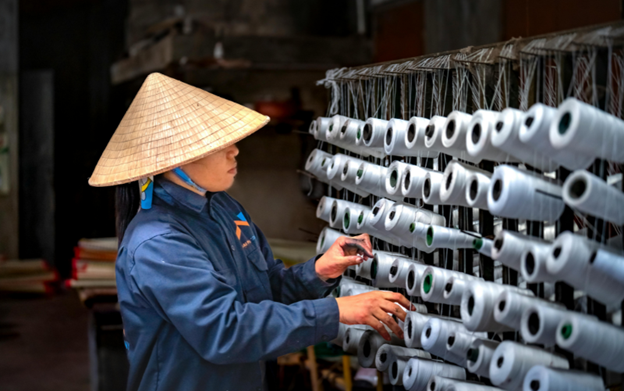
Vietnam manufacturing workforce expanding with 17.4 million employees in 2024, representing 33.4% of the labor force and growing skills in automation and Industry 4.0.
3. Step-by-Step Process for Entering the Manufacturing Industry in Vietnam
Step 1: Market Research & Feasibility Study
Before committing, conduct thorough market research. Key areas:
- Demand for your product in domestic and export markets – what are global trends?
- Competitive landscape – local producers, imported goods, cost structure.
- Labour cost, productivity benchmarks, logistic costs, utility tariffs.
- Site-selection criteria: proximity to ports, road/rail infrastructure, accessibility of supply chain.
- Tools & data sources: Vietnam Industry and Trade Information Center (VITIC), GSO data, industrial property reports.
Step 2: Choose Your Business Structure
Foreign-invested manufacturing operations in Vietnam commonly take the following structures:
- 100% foreign-owned enterprise (FDE) – allows full control, subject to sectoral restrictions.
- Joint venture (JV) with a Vietnamese partner – beneficial if local expertise or networks are needed.
- Representative office – useful for initial market presence but cannot manufacture.
Your choice will affect investment terms, registration process, tax issues, labour issues and partner risk.
Step 3: Legal Registration & Investment Certificate
- Apply for an Investment Registration Certificate (IRC) via the local Department of Planning and Investment (DPI).
- Once the IRC is issued, apply for an Enterprise Registration Certificate (ERC) via the Business Registration Office.
- Additional permits may be required depending on sector (e.g., environmental, construction). Processing time typically ranges from 15–30 working days (or longer depending on complexity).
Step 4: Select the Industrial Zone & Set Up Factory
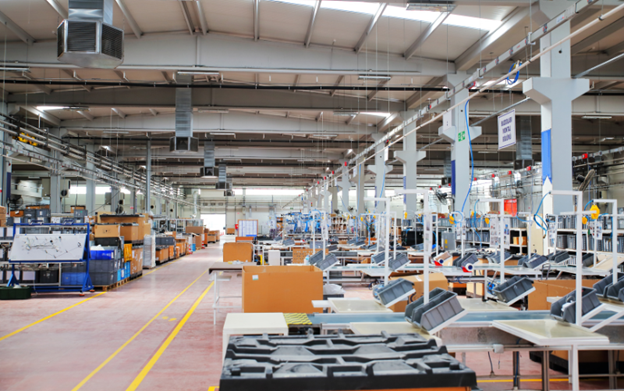
Key criteria for selecting a factory site in Vietnam: convenient location near ports and suppliers, strong infrastructure, one-stop services, competitive lease costs, and ready-built factories by Kizuna.
Key criteria when selecting a factory site:
- Location: choose zones with good logistics (ports, highways), close to suppliers and target markets.
- Infrastructure: reliable power supply, water, waste water treatment, fire-protection, etc.
- Services: quality of one-stop support (licensing, labour registration, accounting, customs).
- Cost / lease terms: compare land/warehouse/factory rental or purchase options.
- For ready-built factory solutions (such as Kizuna): you gain speed, lower upfront investment risk (as opposed to building from ground up).
We highlight that Kizuna offers flexible sizes (for example 100 m² to 10,000 m²) and provides one-stop service support for foreign investors.
Step 5: Licensing & Operational Permits
After your factory site is selected, you will need to secure the following:
- Environmental permit: an Environmental Impact Assessment (EIA) or Environmental Protection Plan depending on scale/sector.
- Fire-protection / Fire Safety Certificate (Fire Safety).
- Construction permit (if building or modifying the structure).
- Operating license if manufacturing regulated goods (e.g., food processing, chemicals). These must be completed before full commercial production.
Step 6: Recruitment & Training of Local Staff
You need to register labour contracts and social/health insurance with the local Labour Department. Requirements include:
- Vietnamese labour laws require employee contracts (indefinite/definite term).
- Minimum wage: regional varies; training costs, allowances to be factored.
- If employing foreign staff, you’ll need work permits and residence registration.
- Invest in training programmes to raise productivity and integrate automation/Industry 4.0.
Step 7: Tax Registration & Customs Procedures
- Register your enterprise for tax (corporate income tax, value-added tax) and obtain a tax code.
- Open a corporate bank account in Vietnam.
- If you will import/export, register with the General Department of Vietnam Customs for customs code.
- Understand the tax incentives available: e.g., preferential CIT of 10–17 % for certain industries, tax holidays, amortisation schedules, import duty exemptions for materials.
- Ensure you comply with bookkeeping, financial reporting under Vietnamese Accounting Standards.
4. Key Challenges That Foreign Manufacturers May Face
While the opportunities are strong, foreign-invested manufacturers should be aware of some of the challenges:
- Administrative & regulatory complexity: despite improvements, licensing and permit processes can still be time-consuming and require skilled local counsel or service providers.
- Rising labour and input costs: while still competitive, wages are rising, and supply-chain cost pressures exist.
- Skill gap in some industries: especially for high-tech, automated production you may find a shortage of locally qualified engineering/automation personnel.
- Infrastructure & logistics bottlenecks: certain zones may still face constraints in utilities or access roads; due diligence is necessary.
- Supply-chain disruption / raw material risks: global shocks, shipping delays, and local raw material sourcing can be a risk.
- Environmental & sustainability requirements: increasing regulatory focus on environmental compliance, waste treatment, and ESG standards.
5. Why Choose Kizuna for Your Manufacturing Business in Vietnam
For foreign-invested manufacturing enterprises looking for speed, efficiency and support, Kizuna stands out as a strategic partner:
- Ready-built factories: Flexible factory sizes (for example from around 100 m² to 10,000 m²) in well-located industrial zones.
- One-stop service support: Legal, HR/recruitment, accounting, logistics and customs support are integrated, reducing the burden on the investor.
- Strategic location: In provinces such as Long An (close to HCMC), offering access to major export logistics and supply-chain hubs.
- Strong track record: Kizuna has enabled many foreign investors (from Japan, South Korea, EU) to enter Vietnam with reduced time-to-market. According to internal report, 95 % of tenants at Kizuna have renewed their lease after three years.
- Risk reduction: Choosing a ready-built location mitigates many of the risks associated with building from scratch (construction delays, regulatory pitfalls, utilities/connectivity issues).
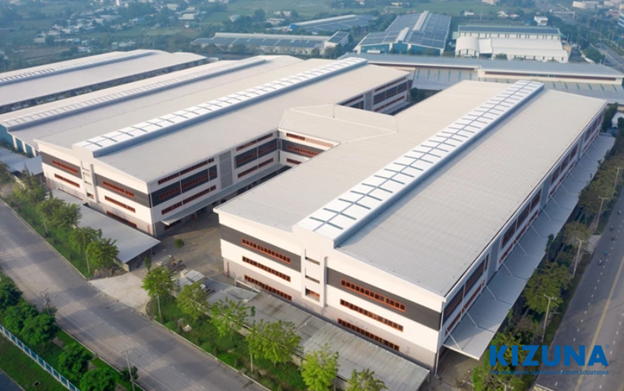
Kizunaのレンタル工場を活用することで、建設遅延や法的リスク、インフラ問題などのリスクを軽減できるベトナム製造業のイメージ。
Risk reduction for manufacturers in Vietnam: choosing ready-built factories like Kizuna helps avoid construction delays, regulatory risks, and infrastructure issues.
By partnering with Kizuna, you benefit from both a strong manufacturing location and experienced local support—allowing you to focus on your core business rather than administrative setup.
- Conclusion
In summary, entering the manufacturing industry in Vietnam involves a structured process—from market research to legal registration, site-selection, licensing, staffing, and tax/logistics set-up. The country offers compelling advantages: cost competitiveness, strong export access, developed industrial zones, and a growing skilled workforce. Of course, challenges remain—especially on regulation, infrastructure, and rising input costs—but with the right partner these can be managed effectively.
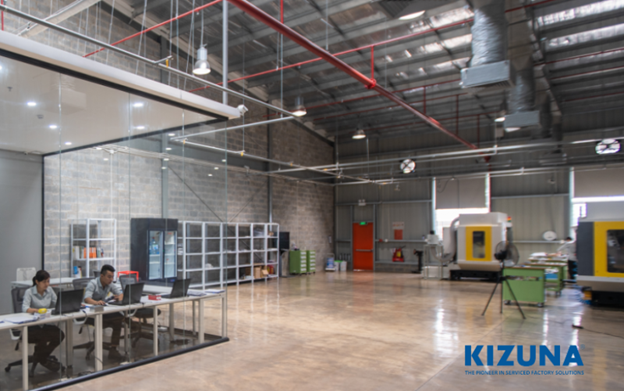
Foreign investors contacting Kizuna for ready-built factory solutions in Vietnam – modern industrial facilities, professional support, and ideal manufacturing location.
If you are planning to establish or expand your manufacturing operations in Vietnam, now is an excellent moment to act. Kizuna offers the ideal combination of location, infrastructure and support services to enable your success in Vietnam’s evolving manufacturing landscape. Contact Kizuna today for a tailored consultation and access to ready-built factory solutions designed for foreign investors.
Hotline: +84 (0)272 3900 123
Visit us at www.kizuna.vn to explore available units and support services.