Key Points for Recruiting Human Resources & Working Environment in Vietnam
Vietnam is increasingly becoming a key destination for foreign-invested manufacturing and service operations in Southeast Asia. With this growth comes the imperative to attract, retain and develop high-quality human resources as well as to build a working environment that supports sustainable performance. For companies planning to enter or expand in Vietnam, understanding the local labour market dynamics, recruitment challenges, working-environment factors and emerging best practices is critical.
This article covers the essential points for building a robust HR strategy and productive working environment in Vietnam—with a final note on how Kizuna supports these goals.

Foreign-invested manufacturers expanding in Vietnam — building strong teams and sustainable working environments
Foreign-invested manufacturers expanding in Vietnam — building strong teams and sustainable working environments
1. Vietnam’s Labour Market Landscape
1.1 Young, expanding workforce
Vietnam boasts a youthful and expanding workforce. Recent reports indicate the labour force reached about 53 million people in mid-2025, with an employment rate at its highest level in years. NIC Global+1 This presents a strong proposition for companies: access to a large pool of labour. However, large quantity does not immediately translate to quality in terms of relevant skills for advanced operations.
1.2 High recruitment demand, rising wages
With Vietnam continuing to attract foreign direct investment (FDI) and supply-chain shifts from other countries, the demand for workers, especially in manufacturing, logistics and technology, is increasing. For example, the Q3 2025 labour market trends article notes growing demand in industrial production and export sectors. NIC Global As labour demand rises, pressure mounts on wages and benefits, meaning companies must plan accordingly in their HR budgets.

Rising labour demand in Vietnam’s manufacturing and logistics sectors — driven by growing FDI and global supply chain shifts
1.3 Skill-gaps & hiring difficulties
While workforce size is high, there are significant skill-gaps in the market. According to an InCorp Vietnam report: “as of 2023, only 27% of Vietnamese workers held formal training, degrees or certifications.” InCorp Vietnam Also, a mid-year 2023 report found that 61% of companies in Vietnam experienced difficulty hiring human capital; 74% pointed to inability to find people with the right skills at the right price. vietnamnews.vn This means for manufacturing firms (especially those investing in higher-value operations) it is not enough to hire — you may need to invest in training, development and workforce readiness.
1.4 Regulatory landscape
Another dimension of the labour market is legal/regulatory compliance. The Vietnamese Labour Code (2019) and related decrees govern contracts, working hours, wages and social insurance. the-shiv Foreign companies operating in Vietnam must understand these rules thoroughly to avoid compliance risk, fines or reputational damage.
2. Recruitment: Challenges and Strategic Responses
2.1 Key recruitment challenges
a) Skill mismatch
As mentioned above, many workers lack formal training aligned with manufacturing, engineering, digital or managerial roles. This leads to difficulty filling key positions. InCorp Vietnam+1
b) High turnover
Turnover remains a major concern. According to the Manpower Vietnam insights: “One of the most pressing HR issues in Vietnam is high employee turnover… Workers frequently move between companies in search of better wages, benefits, or working conditions.” Manpower High turnover disrupts productivity, increases recruitment/training costs and undermines team cohesion.
c) Competition for talent & employer branding
Given the rising demand for talent, companies must differentiate themselves to attract and retain employees. Employer branding, career development opportunities and a positive working culture increasingly matter.
d) Compliance & administrative burden
For foreign-invested companies, managing labour contracts, social insurance, tax, visas (for foreign workers), and other HR processes can be complex. Non-compliance risk is real. the-shiv+1
2.2 Strategic responses and best practices
Provide competitive compensation & career growth

Young Vietnamese professionals seeking career growth and job stability — driving companies to offer transparent pay and promotion systems
Vietnamese employees, particularly younger ones, value career progression and development. The Manpower Vietnam article notes a survey where 40 % of workers prioritized salary and job stability. Manpower Companies should therefore offer transparent salary frameworks, performance-based growth, bonuses, and internal mobility options.
Build flexible and modern working models
Adaptation to flexible/hybrid working models (where applicable), enhanced employee experience and aligning job roles to personal growth are increasingly valued. The InCorp Vietnam report says: “Organizations that embrace customized hybrid schedules and meaningful in-person touchpoints will be better positioned to attract and retain top talent.” InCorp Vietnam Even in manufacturing contexts, offering training, job rotation, upskilling, and internal progression helps.
Invest in upskilling & internal mobility
To close skill-gaps, companies should invest in structured training programmes, cross-functional rotation and internal career-lattice models (as opposed to only vertical promotions). InCorp Vietnam+1 This not only helps fill difficult roles, but also enhances retention by giving employees a sense of growth and purpose.
Enhance employer branding and culture
Strong employee experience and organisational culture are becoming differentiators. The HR Asia article states: “HR in Vietnam is gradually transcending its traditional roots, emerging as a function that shapes organisational culture, drives employee engagement and creates competitive advantage.” HRM Asia Therefore, HR teams must become strategic partners, not just administrative support.
Leverage recruitment channels and partnerships
Given the challenge of finding skilled workers, companies can partner with vocational schools, local training centres, or HR service firms to access talent pipelines and tailor training. They can also use digital recruitment platforms, employer branding campaigns and partnerships with labour-supply agencies.
3. Working Environment: What Drives Retention and Productivity
Creating a productive working environment goes beyond recruitment: it spans physical facilities, work culture, safety and employee wellbeing.
3.1 Safety, compliance and fairness
Safe working conditions, transparent policies and compliance build trust. Ensuring that contracts, working hours, overtime, social insurance and other legal elements are managed correctly is vital. Failure to do so risks penalties and employee disengagement. the-shiv+1 Particularly for manufacturing or industrial operations, compliance around occupational safety, overtime labour, shift work and welfare matters.
3.2 Employee experience and company culture
Today’s workforce in Vietnam expects more than just a job — they expect an environment where their voice is heard, their growth path visible, and the culture supportive. The HR Asia insights emphasise culture and engagement as “competitive edges”. HRM Asia Elements of positive culture include: inclusive leadership, recognition, feedback loops, empowerment, diversity and a sense of purpose.
3.3 Facilities, infrastructure & work-life balance

Modern factory environment in Vietnam — clean facilities, safe equipment, and comfortable working conditions that support employee retention
In an age where employees compare across markets, providing modern facilities (clean workspace, safety equipment, amenities), balanced working hours, and reasonable shift schedules helps retention.
For manufacturing operations, shift design, transport logistics, canteen services, dormitories (if provided) and welfare programs matter.
3.4 Well-being, development and purpose
Employees increasingly value meaningful work, development opportunities and “why they are there”. This is especially true for younger generations. As one source states:
“Employees in Vietnam seek competitive salaries, career growth opportunities, work-life balance and job security.” ManpowerTherefore, companies should embed well-being programmes, career path transparency, mentorship and continuous learning into their culture.
3.5 Retention through environment
When working environment supports growth, safety, purpose and comfort, retention naturally improves. Combined with competitive compensation and internal mobility, this environment can reduce turnover and cost of replacement.
4. Practical Checklist for Manufacturing and Industrial Employers in Vietnam
For companies setting up or expanding operations (especially in manufacturing) in Vietnam, here is a practical checklist to align recruitment and working-environment practices.
|
Area |
Key Actions |
|
Labour-market assessment |
Analyse local workforce supply in your region, identify skill-gaps and wage benchmarks. |
|
Job design & description |
Craft clear roles with skills, responsibilities, contract type, location, shift patterns and career path. |
|
Recruitment strategy |
Use multiple channels (job fairs, HR firms, online platforms), emphasise employer branding, highlight learning/development opportunities. |
|
Onboarding & training |
Establish structured onboarding, technical training, cross-functional rotation, mentoring programmes. |
|
Compensation & benefits |
Provide transparent salary bands, performance bonuses, insurance, allowances, career growth. |
|
Working environment |
Ensure safe/fair working conditions, up-to-date equipment, welfare amenities, good transport and accommodation (if needed). |
|
Culture & engagement |
Define company values, create feedback/recognition systems, promote internal mobility, invest in leadership development. |
|
Compliance & HR administration |
Ensure labour contracts comply with Vietnamese regulations, manage social insurance and taxes, maintain records, stay updated on legal changes. |
|
Retention & mobility |
Monitor turnover, conduct stay interviews, provide promotions or lateral moves, offer continuous learning. |
|
Review & improvement |
Periodically audit HR metrics (turnover rate, training hours, employee satisfaction), refine practices accordingly. |
5. Why Location, Infrastructure & Ecosystem Matter — Role of Kizuna
When recruiting and building a strong working environment, location, infrastructure and ecosystem can make a significant difference.
Being located in a well-planned industrial park with modern facilities, access to transportation, proximity to labour pools and support services reduces many operational burdens. This is where Kizuna comes into play.
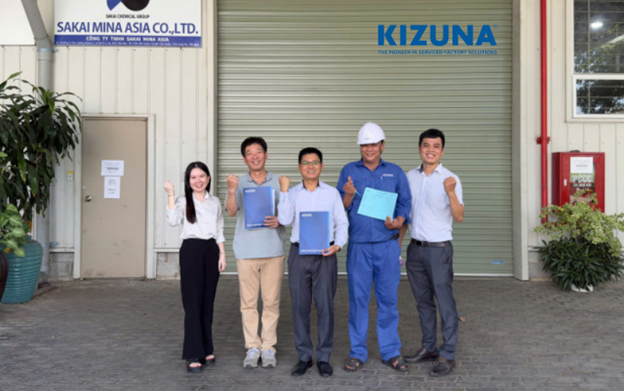
Strategic location and modern infrastructure at Kizuna Industrial Park — supporting efficient operations and strong workforce development in Vietnam
Kizuna offers a compelling combination of features:
- Ready-built factory and office infrastructure in key industrial zones.
- Access to a strong labour ecosystem (with nearby talent pools, training opportunities, and other tenant companies).
- Support services for HR, compliance, logistics and operations — enabling companies to focus on talent and culture rather than infrastructure headaches.
- A working environment that attracts employees: modern facilities, good commuting/transport links, safe environment, and amenities.
For companies planning to establish or expand manufacturing operations in Vietnam, aligning your HR strategy with location/infrastructure advantages offers a stronger base for success.
6. Conclusion
If your company is ready to establish or expand manufacturing operations in Vietnam and aims to build a strong workforce, supportive working environment and competitive edge — we invite you to explore how Kizuna Industrial Park can support you.
Discover how our strategic location, modern infrastructure and HR-friendly ecosystem can help you attract, recruit and retain talent while focusing on core business growth.
>>> Learn more about Kizuna Industrial Park
Recruiting human resources and building the right working environment in Vietnam are not simply operational tasks — they are strategic imperatives. With demographic advantages, growing investment flows and evolving labour-market expectations, companies that proactively address recruitment challenges, build modern, employee-centred working environments and align their HR strategy with broader infrastructure and ecosystem advantages will be best positioned for success. By leveraging the right location and infrastructure (such as Kizuna) and putting in place robust HR and environment practices, organizations can gain a significant competitive advantage in Vietnam's evolving manufacturing and investment landscape.