Current Situation and Key Points for Success of Japanese Manufacturing Companies in Vietnam
Vietnam has emerged as one of the most compelling destinations in Southeast Asia for manufacturing investment — particularly from Japanese firms. With its strategic location, favourable trade agreements, young workforce and strengthening infrastructure, Vietnam offers a high-potential base for Japanese manufacturers looking to expand their footprint. But success is not automatic: companies must understand local market dynamics, workforce issues, regulatory environment and operational infrastructure. For Japanese manufacturing companies operating or seeking to enter Vietnam, knowing the current situation and focusing on key success factors is crucial.

Japanese manufacturers expanding in Vietnam — a high-potential destination in Southeast Asia with strong infrastructure, young workforce, and trade advantages
1. Current Situation of Japanese Manufacturing Firms in Vietnam
1.1 FDI and Japanese presence
Japan remains among the major foreign investors in Vietnam, particularly in processing and manufacturing. According to a report by B&Company, there were over 3,200 Japanese enterprises operating in Vietnam in 2023, representing more than 15 % of all foreign-direct investment (FDI) enterprises in the country. B-Company+2vietnamnews.vn+2 A survey by Japan External Trade Organization (JETRO) showed that more than 56 % of Japanese enterprises in Vietnam plan to expand operations within the next one to two years. vietnamnews.vn+1 These data reflect the strong commitment of Japanese manufacturing firms to Vietnam as a production base and growth market.
1.2 Manufacturing growth & supply chain shifts
Vietnam’s manufacturing sector is rapidly evolving. As global companies diversify supply chains away from China, Vietnam is benefiting. According to a recent industry overview, manufacturing contributes roughly one-quarter of Vietnam’s GDP and is driven by electronics & electrical equipment, automotive/ machinery and export-oriented production. B-Company+2www.kizuna.vn+2
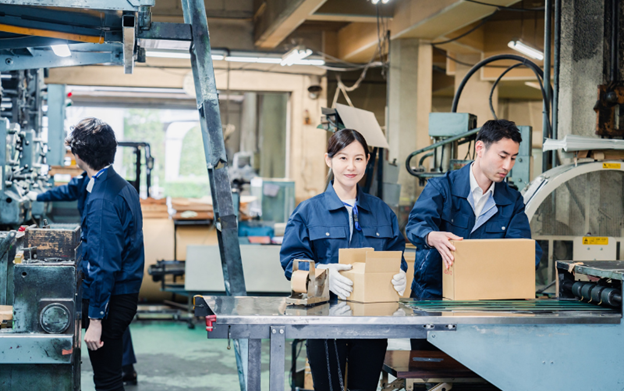
Japanese manufacturing firms in Vietnam balancing opportunity and challenge — cost-competitive production, skilled labour, and the need for quality and supply-chain resilience
For Japanese firms, this presents opportunity: Vietnam offers cost-competitive manufacturing, access to skilled labour, and proximity to export markets. However, it also places pressure on companies to maintain quality, manage logistics, and ensure supply-chain resilience.
1.3 Opportunities & Challenges
Opportunities
- Large and growing young labour pool in Vietnam, plus increasing domestic market demand.
- Free trade agreements (e.g., CPTPP, EVFTA) boosting export competitiveness. kizuna.vn
- Government support for industrial parks, infrastructure and foreign investment incentives.
Challenges
- Labor shortages in certain areas: JETRO survey noted that 42.7 % of Japanese companies in Vietnam reported human-resources shortages. The Saigon Times
- Rising wages and labour costs in key manufacturing regions.
- Infrastructure and logistics bottlenecks (transport, utilities, skilled labour) remain constraints. kizuna.vn+1
- Regulatory and compliance risks: foreign firms must navigate Vietnamese labour law, environmental rules and business-licensing frameworks.
- Intensifying competition from other Southeast Asian countries as supply-chain diversification proceeds.
2. Key Success Factors for Japanese Manufacturing Firms in Vietnam
To succeed in Vietnam, Japanese manufacturing firms should pay attention to several critical dimensions. Below are the most important factors and practical guidance.
2.1 Strategic location & infrastructure
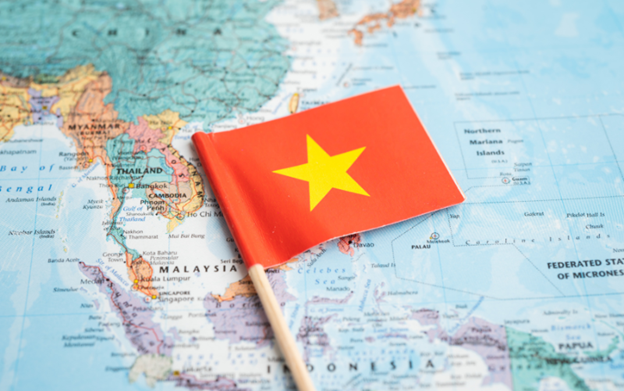
Strategic industrial locations in Vietnam — modern infrastructure, ready-built factories, and strong connectivity for Japanese manufacturers
Selecting the right geographic base is foundational. Factors include:
- Proximity to major transport hubs (ports, airports), major industrial corridors (e.g., Northern Vietnam, Red River Delta, South East region).
- Availability of modern industrial parks with ready-built factories, reliable utilities, logistics services, and workforce access.
- Infrastructure that supports manufacturing: reliable power, water, waste treatment, roads, and good connectivity to suppliers and export channels.
For Japanese manufacturing firms with global supply-chain ambitions, being in a well-planned industrial park reduces operational risks, simplifies logistics and improves talent access.
2.2 Workforce quality & talent management
The workforce is among the most critical assets for manufacturing companies.
Talent recruitment & development
- Japanese manufacturers must not only recruit local staff but also invest in training, skills development (technical / engineering), and onboarding.
- Building a pipeline of skilled operators, engineers and managers is essential given rising competition for talent in Vietnam.
- A culture of continuous improvement, Kaizen, and operational excellence aligns well with Japanese manufacturing practices.
Retention and engagement
- To reduce turnover, firms must deliver competitive compensation, career progression paths, strong corporate culture and safe working conditions.
- Japanese firms with strong reputation for quality and employee development tend to have higher retention and better productivity.
2.3 Operational excellence & manufacturing system alignment
Japanese manufacturing companies often succeed by bringing their system-thinking: Lean manufacturing, just-in-time, quality assurance, Kaizen culture, and supplier integration. In Vietnam, this means:
- Aligning production systems with local context (language, skill levels, infrastructure).
- Ensuring supply-chain robustness: local sourcing where possible but maintaining global standards of quality and reliability.
- Embedding continuous improvement practices from day one.
2.4 Supply-chain diversification & export orientation
Many Japanese manufacturing firms in Vietnam operate not just for the domestic market, but as part of global supply chains. Key aspects:
- Using Vietnam as a production base for export, benefiting from trade agreements and logistic efficiencies.
- Diversifying away from China and other high-cost regions.
- Integrating local suppliers into global quality systems to build resilient downstream value chains.
2.5 Regulatory compliance & sustainability
Compliance with Vietnamese regulations (labor laws, environmental standards, safety) is non-negotiable for Japanese firms. Key best practices:
- Maintain rigorous labour contract management, worker safety, fair wages and benefits.
- Environment and sustainability: Many Japanese firms bring high standards and expect sustainability practices (energy use, waste management, carbon footprint) to align with global commitments.
- Engage with local communities and authorities proactively.
2.6 Local-partner ecosystem & industrial park synergy
Success is often enhanced by leveraging local networks: suppliers, service providers, HR firms, logistics firms, training institutes, government agencies and industrial-park providers. Choosing a modern industrial park that offers value-added services (HR support, training, utilities, logistics) can streamline setup and operations.
3. Recommended Approach for Japanese Manufacturing Firms Establishing in Vietnam
Here is a practical roadmap for Japanese manufacturing firms looking to establish or expand operations in Vietnam:
Step 1: Strategic planning & market entry
- Define your site-selection criteria: region, infrastructure, workforce, logistic connectivity, cost structure, incentives.
- Assess Vietnamese manufacturing ecosystem for your industry (electronics, automotive, machinery, components).
- Engage local advisors, industrial-park managers and government agencies early.
Step 2: Choose the right industrial park and facility
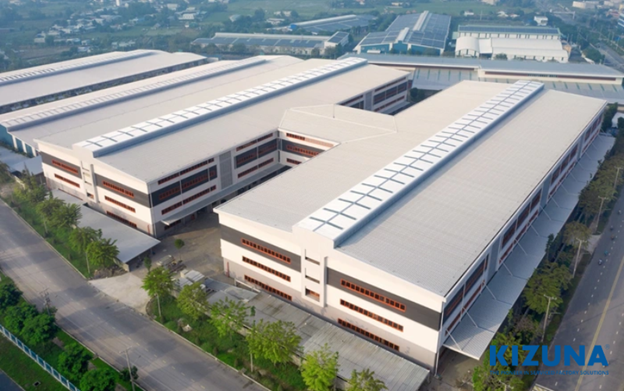
Japanese manufacturers selecting modern industrial parks in Vietnam — ready-built factories, full support services, and a strong Japanese business community
- Opt for parks that are factory-ready or offer build-to-suit with minimal lead time.
- Ensure park offers strong supporting services: utilities, social infrastructure, HR/training, compliance, logistics.
- Consider parks with other Japanese-manufacturing tenants — this supports supplier networks and talent sharing.
Step 3: Talent & workforce strategy
- Develop recruitment plan locally: partner with vocational colleges, technical schools, HR agencies.
- Set up training programmes aligned with your manufacturing standards and Japanese quality expectations.
- Build retention strategy: competitive remuneration, career tracks, safety, good facility, Japanese corporate culture adapted to Vietnam.
Step 4: Operational setup & manufacturing excellence
- Roll out manufacturing system aligned with your global standards: Lean, Kaizen, TPM, quality control.
- Localise operations while maintaining your global quality and cost targets.
- Integrate local suppliers gradually but ensure they meet required standards.
Step 5: Supply-chain & export build-out
- Use Vietnam as an export base: take advantage of FTAs (e.g., EVFTA) and supply-chain shifts.
- Work with logistics providers, minimise lead times, optimize cost.
- Leverage Vietnam’s role in regional value chains (ASEAN, Asia-Pacific).
Step 6: Sustainability, compliance & continuous improvement
- Monitor labour law compliance, environment regulation, worker safety.
- Embed sustainability in operations: energy efficiency, waste disposal, community relations.
- Promote continuous improvement culture among Vietnamese workforce and integrate with Japanese HQ systems.
Step 7: Review, scale-up & localisation
- After initial operations, review performance: cost-quality-delivery metrics, talent turnover, local supplier maturity.
- Scale up operations or diversify product lines if performance is strong.
- Consider deeper localization (managerial roles, R&D) to leverage Vietnam as strategic base.
4. Why Kizuna Industrial Park is a Strategic Choice for Japanese Manufacturing Firms
When recruiting and building a strong working environment, location, infrastructure and ecosystem can make a significant difference. Being located in a well-planned industrial park with modern facilities, access to transportation, proximity to labour pools and support services reduces many operational burdens. This is where Kizuna comes into play.
「最新設備のレンタル工場と充実したサポート体制を備え、日系製造業が集うベトナムのKizuna工業団地」
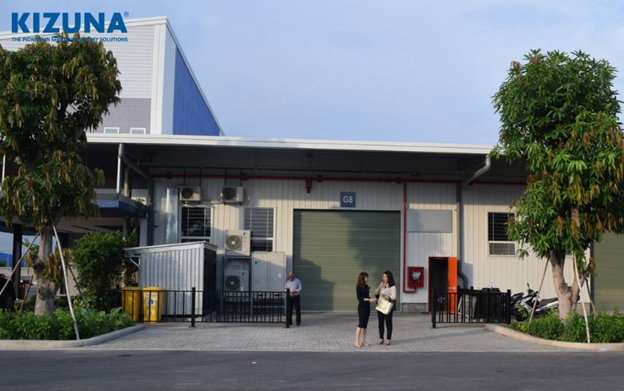
Kizuna Industrial Park in Vietnam — modern ready-built factories, full support services, and a thriving community for Japanese manufacturers
Kizuna offers:
- Strategic location in Vietnam’s major industrial region.
- Modern factory infrastructure and ready-built facilities tailored for Japanese manufacturers.
- A supportive ecosystem including HR, logistics, maintenance, compliance support and other value-added services.
- Access to supply-chain networks, existing Japanese manufacturing tenants and Vietnamese workforce.
For Japanese manufacturing companies aiming to succeed in Vietnam, Kizuna provides the base to attract talent, build operational excellence, integrate into supply chains and scale up efficiently.
5. Conclusion
If your company is planning to establish or expand manufacturing operations in Vietnam and wants to benefit from a best-in-class base with Japanese-friendly infrastructure, workforce access and supply-chain support — we invite you to explore what Kizuna Industrial Park can offer.
Discover how our location, infrastructure and ecosystem align with your Japanese manufacturing standards and strategic ambitions.